
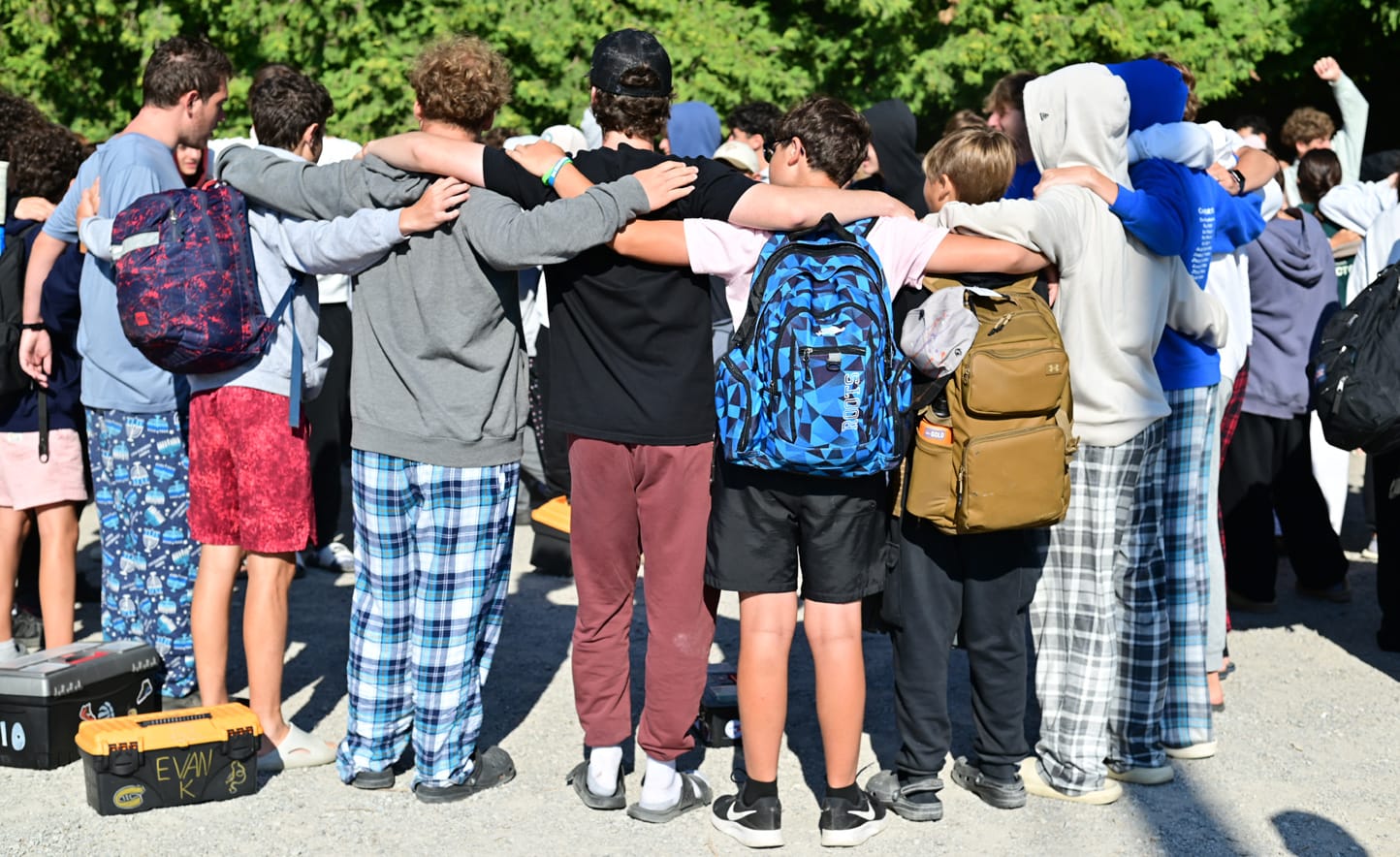
Camp starts next week. While there’s a ton of excitement, it’s also a time when pre-camp anxiety peaks. If you are having the “I’m so anxious to go to camp” conversations in your house, you’re not alone. And if you’re worried about your camper, you’re not alone either.
Emma Fogel, Registered Social Worker with a Master of Social Work, recently delivered an incredible talk about emotional camp readiness. In her direct, empathetic style, Emma explained the true nature of anxiety, offered advice for how parents can show up differently in moments of anxiety and shared tips for helping kids manage their feelings during the summer.
What is anxiety really?
According to Emma, anxiety is a chronic, inappropriate activation of a fear response. The reaction typically does not fit the scenario, promoting everyday stress experiences to emergency status. Anxiety demands certainty and control, safety and comfort and predictability.
She broke down the cycle of dysregulation:
- Trigger: camp is coming and the worrying starts
- Thoughts: lots of what ifs accompanied by a somatic response (tummy aches, headaches)
- Behaviours: avoiding, cancelling, asking lots of questions or anger responses (tantrums, yelling and lashing out)
- Guilt: hurt, shame, loneliness, sadness
How parents can help (and it’s not what you think)
When anxiety shows up, many parents tend to accommodate it – meaning they change their behaviour to reduce or avoid their child’s anxiety. According to Emma, this happens in 97% of families with anxious kids. And this statement really quieted the crowd, “The more we accommodate – giving the child what they want in the moment versus what they need overall – there are long-term consequences.”
Everyday stress is actually healthy and necessary. When a child has positive stress experiences surrounded by support (think trying a new activity, making new friends, going on a canoe trip), it helps them develop critical life skills.
So what can parents do? Emma recommends a few strategies to deal with a child’s anxiety:
- When anxiety is talking, don’t take the bait.
- Understand that this type of irrational fear overestimates the threat and underestimates a child’s ability to cope.
- Try not to get lost in the content of what the anxiety is saying – offering logic to a feeling that is illogical just creates escalation and more accommodating, continuing the cycle of disregulation.
- Notice when the anxiety shows up and recognize it as a feeling that is part of your child, but not all of your child.
- Show your child how to respond differently and support your child without accommodating the anxiety.
She often counsels parents to respond with “mac and cheese” statements to communicate belief and trust that kids can survive the moment rather than complete the task.
- Mac: accept and validate the feeling
- Cheese: show confidence that your child can tolerate the distress
Big feelings at camp
It’s inevitable that kids that have big feelings at home will have big feelings at camp sometimes. How can you prepare them before and during the summer? Emma’s tips include:
- Front load the camp schedule and have a plan for times of under stimulation (rest hour, end of the day, after evening program). These are typically times when kids will write letters complaining about camp.
- Create a coping toolbox (literal and figurative) – equip kids with activities, ideas and low stimulation items that they can turn to when they are in their feelings (e.g. books, squishies, journals, mad libs).
- Make a falling asleep plan, especially if kids are used to falling asleep with you or with technology.
- Prepare for the moment of goodbye – the buses are an overstimulating environment and is also the moment of separation. Be intentional about everything – who your child is sitting with, where they’re meeting, the number of hugs and kisses prior to boarding.
- Create a camp coping plan (Emma recommends doing it on a recipe card) with different options for when your child is in their feelings. Having it on one page and easily accessible allows them to grab it and use it easily.
Technology boundaries
It wouldn’t be a conversation about kids and camp today without talking about technology. Emma started this part of her talk with a question: “What is the opposite of anxiety?” Many people answered “calm.” But it’s actually trust. Kids need to develop the belief in themselves that they can get through hard things.
Emma was emphatic about technology:
- If you are planning to send your child to camp with a phone, you are feeding the disorder – access to parents and creating an obstacle to being present.
- Stay firm to your technology boundaries regardless of the negotiations or protests.
- Resist the temptation to text your kids counsellors or call the camp after a homesick letter.
Packing technology in your kids’ camp bags sends the wrong message – we don’t trust camp and we don’t trust you to get through difficult times. It is so important to allow kids to have the camp experience without you, so they can develop the independence you want them to have.
Emma closed her talk with the positive reminder of why we all chose camp in the first place. All the things that support mental health and help to combat anxiety and depression – nature, friendship, play, routine, problem solving, belonging, community and meaningful connections – are part of the fabric of overnight camp.
Giving our kids the gift of a summer away from technology, playing with their friends, laughing and being in genuine joy helps them build resiliency and a strong sense of self.